 yog.guru
Harnessing Vital Energy
The Science and Practice of Bandhas
In classical Hatha Yoga and the authentic Vedic lineage upheld by Shri Yog Abhyas Ashram Trust (SYAAT), Bandhas(energy locks) are not mere muscular holds. As taught by Swami Amit Dev, yoga is fundamentally a transformative science aimed at uniting individual consciousness with the divine, rather than a system of physical exercise alone. Within this paradigm, Bandhas serve as essential psycho-energetic mechanisms designed to conserve, redirect, and sublimate prana (the vital life-force).
The word Bandha stems from the Sanskrit root meaning “to bind,” “to lock,” or “to harness”. In regular somatic flow, pranic energy constantly dissipates outward through physiological activities, senses, and downward elimination (Apana). Applying Bandhas arrests this dissipation, directing the energy into the central spiritual channel—the Sushumna Nadi—catalyzing inner purification, mental stillness, and higher spiritual awakening.
The Three Fundamental Bandhas
The physical and energetic architecture of Bandhas centers upon three distinct internal junctions along the spinal column.
1. Jalandhara Bandha (The Throat Lock)
- Physiological Action: The head tilts slightly forward and downward, resting the chin firmly in the jugular notch between the collarbones, while the chest lifts to meet the chin.
- Energetic Function: Jalandhara seals the upper terminus of the spinal column. It regulates the upward rush of Prana Vayu during breath retention (kumbhaka), preventing pressure imbalances toward the brain, eyes, and inner ears.
- Therapeutic Benefits: Stimulates the thyroid and parathyroid glands, compresses the carotid sinus to slow heart rate, and calms mental agitation.
2. Uddiyana Bandha (The Abdominal Lift)
- Physiological Action: Practiced exclusively on external retention (Bahya Kumbhaka—after a full exhale), the abdominal wall is drawn inward toward the spine and lifted upward beneath the ribcage, creating an abdominal cavity hollow.
- Energetic Function: Known as the “upward-flying lock,” Uddiyana compels prana to ascend from the lower abdomen toward the heart center (Anahata). It awakens the Samana Vayu at the navel (Manipura Chakra), stoking the gastric fire (Jatharagni).
- Therapeutic Benefits: Deeply massages internal organs (liver, spleen, pancreas, intestines), alleviates constipation and digestive slowness, tones the diaphragm, and relieves visceral tension.
3. Mula Bandha (The Root Lock)
- Physiological Action: The conscious, subtle contraction and upward lifting of the perineum/pelvic floor muscles, focused midway between the anus and the genitals.
- Energetic Function: Mula Bandha locks the lower gateway of the body. Naturally, Apana Vayu flows downward toward excretion; applying Mula Bandha forces this descending energy upward toward the navel, uniting Prana and Apana to ignite internal awakening.
- Therapeutic Benefits: Tones the pelvic floor, strengthens reproductive and excretory health, stabilizes the base of the spine, and grounds emotional instability.
Maha Bandha: The Great Lock
When all three locks are unified into a single synchronized hold, it is termed Maha Bandha (The Great Lock).
Bali Yoga School
           [ Jalandhara Bandha ]  --> Halts upward dispersion (Throat)
                     ▲
                     │
           [ Uddiyana Bandha ]    --> Draws energy upward (Solar Plexus)
                     ▲
                     │
           [   Mula Bandha   ]    --> Prevents downward leak (Perineum)
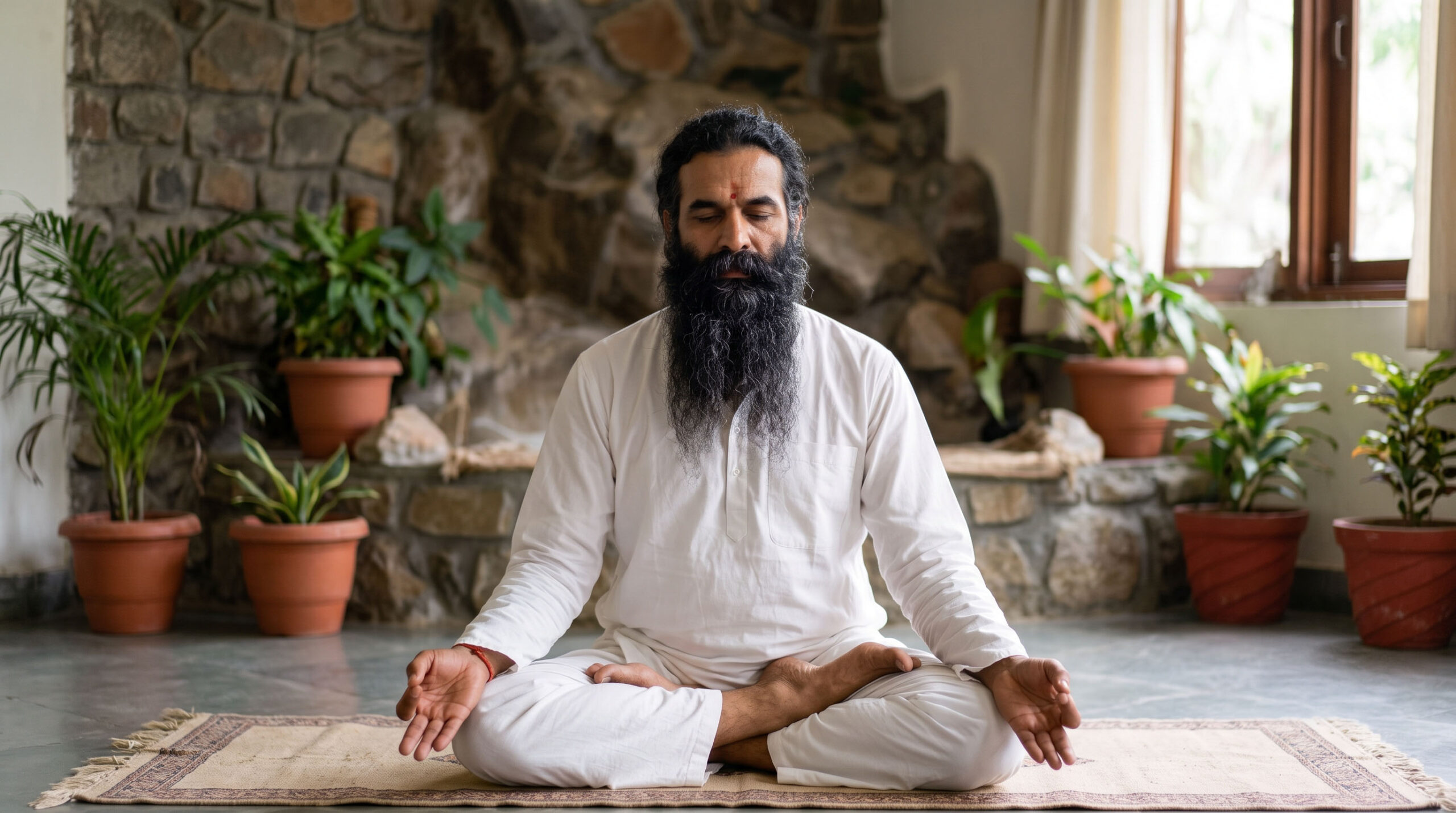
In authentic yogic practice, Maha Bandha is engaged during external breath retention in a steady meditative posture (such as Padmasana or Siddhasana):
- Exhale completely, emptying the lungs.Bali Yoga School
- Engage Mula Bandha, followed by Jalandhara Bandha, and draw the abdominal wall into Uddiyana Bandha.
- Maintain steady awareness across the root, navel, and throat energy centers without straining the breath.
- To release, release gently in reverse order before taking a calm, smooth inhalation.Bali Yoga School
Principles of Practice and Precautions
Under authentic Guru-Parampara guidance, Bandhas require discipline, patience, and meticulous physical preparation:
- Always Practice on an Empty Stomach: Applying abdominal locks demands clear visceral space. A minimum of 3 to 4 hours after meals is necessary.
- Integrate with Breath Mastery: Bandhas should never be forced or rushed without foundational mastery of steady Asana (steady posture) and basic Pranayama (regulated respiration).Bali Yoga School
- Avoid Strain: The lock should feel secure and centered, never suffocating. If trembling, lightheadedness, or racing pulse occurs, release immediately and normalize breathing.
- Contraindications: Uddiyana and Maha Bandha are strictly contraindicated during pregnancy, menstruation, or for individuals experiencing acute abdominal inflammation, ulcers, hiatal hernias, or uncontrolled cardiovascular conditions/hypertension.
Practiced with correct alignment and internal intent, Bandhas transition the practitioner beyond surface-level fitness, steadying the fluctuating mind and unlocking deep spiritual vitality.
About the Author